
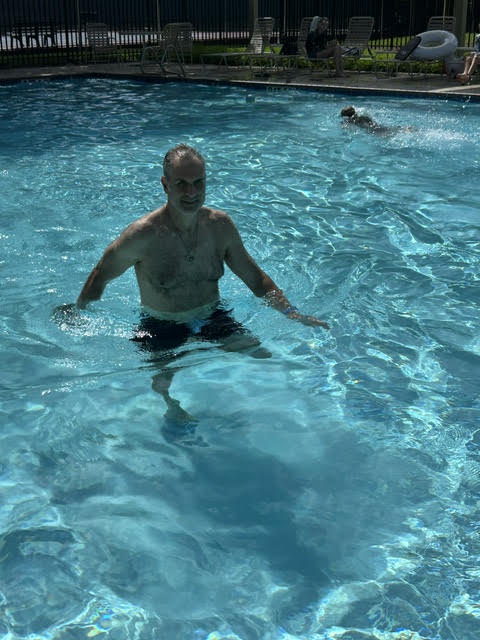
This morning at 9:00 a.m., I walked just one block from my house to our neighborhood swimming pool for one of the simplest—and most effective—cardio workouts I’ve done in a long time.
The Texas heat was just beginning to build, but thankfully this pool has plenty of shade, making it a comfortable place to exercise even during the summer months. Sometimes the best workout isn’t the most complicated one. It’s simply the one you’ll consistently do.
Keeping It Simple
Today’s workout didn’t require any special equipment.
No water dumbbells.
No resistance gloves.
No flotation belt.
Just brisk water walking from one side of the pool to the other for 45 continuous minutes.
Because I recently experienced a heart attack, my cardiologist prescribed a safe aerobic workout with one important guideline:
Keep my heart rate below 110 beats per minute.
To be honest, I felt like I could have pushed much harder. My energy level was good, and I wanted to increase the pace. But recovery is about being smart, not proving how much you can do. Following your physician’s recommendations is one of the best investments you can make in your long-term heart health.
Why Water Walking Is So Effective
Water walking is often overlooked, but it offers some remarkable benefits:
- Provides an excellent cardiovascular workout.
- Significantly reduces stress on the knees, hips, ankles, and lower back.
- Creates gentle resistance in every direction, helping strengthen muscles without heavy weights.
- Improves circulation and endurance.
- Is appropriate for many people recovering from injury, surgery, or cardiovascular events when approved by their healthcare provider.
The natural resistance of the water means your muscles are working during every step, while the buoyancy protects your joints from the impact that comes with walking or jogging on land.
Recovery Is About Consistency
One lesson I’ve learned during my recovery is that progress isn’t always measured by intensity.
Sometimes the greatest gains come from showing up consistently, staying within your prescribed limits, and allowing your heart to become stronger one workout at a time.
Today’s session wasn’t about setting records.
It was about investing in my health for the future.
Give Water Walking a Try
You don’t need to have heart disease to benefit from water walking.
If you’re looking for a low-impact, joint-friendly form of exercise that still provides an effective cardiovascular workout, I encourage you to give it a try. Whether you’re recovering from a medical condition, managing arthritis, carrying extra weight, or simply looking for a refreshing alternative to walking on land, water walking can be an outstanding addition to your fitness routine.
Remember to start at a comfortable pace, stay hydrated, and always consult your physician before beginning any new exercise program if you have heart disease or other medical conditions.
Sometimes the simplest workouts are the ones that make the biggest difference.
Here’s to stronger hearts, healthier lives, and taking one step at a time—whether it’s on land or in the water.