Click HERE to download free the Cida Fitness Mediterranean Recipe Bundle.
Personal Training, Fitness & Nutrition Coaching and Group Fitness
A powerful beverage I’ve been drinking every day for the last 2 weeks to improve my cardiovascular health is THE Lemon Drink. For being such a simplistic beverage with only 2 ingredients (warm water and fresh-squeezed lemon juice), it delivers a powerful punch of benefits beyond cardiovascular health.
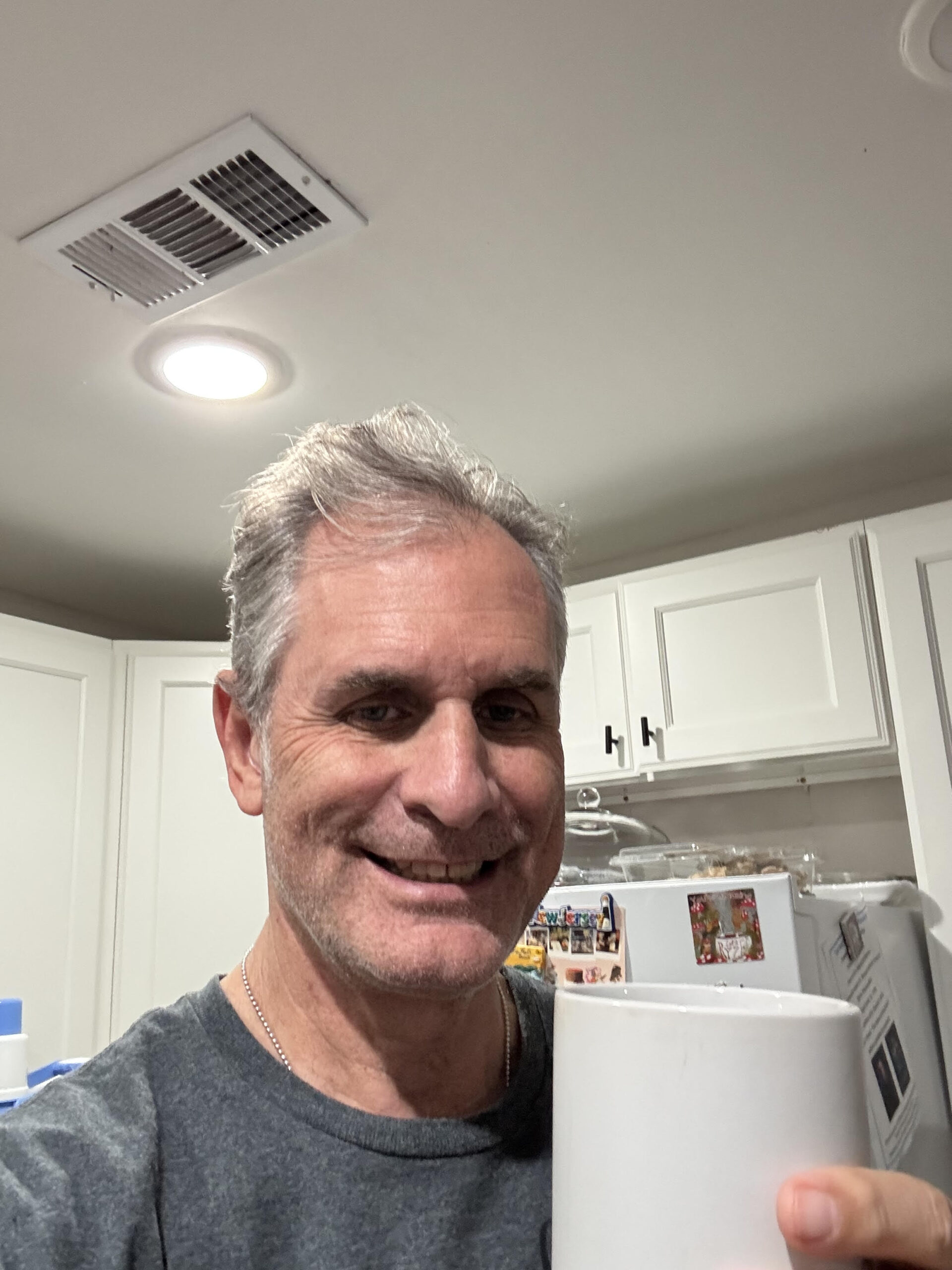
The lemon is loaded with phytonutrients, such as flavonoids and antioxidants, and is mostly known for liver detox and support. Sure, these are good benefits like supporting your body’s natural detox pathways, improving insulin sensitivity, and reducing fat buildup in your liver cells. But, the benefits go beyond this.
The lemon’s natural acids help to stimulate bile production (bile is a fluid made by the liver that helps break down fats and carry waste out of the body), which assists in breaking down fats more efficiently and improves digestion.
Additionally, it helps improve gut health. This is huge since your gut is where health begins and is mostly responsible for your overall immune functioning. It helps to support a diverse gut microbiome, lowers inflammation, and enhances mood disposition. This is most likely why I had a general good feeling every day from just 1 week of consuming this drink.
And finally, there are cardiovascular health benefits, which is why I originally started drinking The Powerful Lemon Drink. These include: helps to regulate blood sugar levels; supports healthy blood flow and circulation, maintains healthy cholesterol balance, and reduces oxidative stress and inflammation.
Below are a few tips to drinking The Powerful Lemon Drink:
It was exactly 3 months since I had my heart attack, and things were going well .. . . till I had my first setback.
I was exercising every day, walking, lifting weights, swimming, going to work, and all of my normal activities. Then, all of a sudden, one night I was watching a Boston Celtics vs. NY Knicks game lying down on my sofa, and then I became extremely dizzy and felt like passing out. It was a scary feeling because it was unexpected, and I didn’t know how serious this incident was going to be.
My wife, Cida, immediately called the paramedics, and they arrived at my house within 2 minutes (Sugar Land has great municipal services). Fortunately, everything checked out fine with me. The paramedics checked my blood pressure, blood sugar levels, and even did an EKG. I was relieved, but Iwas wondering what prompted this episode.
Since it was late in the evening, I could not contact my cardiologist to discuss further. I had to wait till the next morning. This was an uncomfortable situation because I really didn’t know what was wrong with me. Scary thoughts went through my mind for the first time, such as, “what if I don’t wake up?”
I knew this was the evil one trying to instill fear in my mind, leading to despair. If I didn’t have self-awareness of this, I may have been drawn towards despair. Thankfully, I did not.
A few things to think about afterwards:
First, I had to remind myself that a setback is a reminder that healing is a journey and not an immediate thing. Seeking a cure is short-term and something that is physical, such as an Achilles Rupture Tear. This type of physical injury will eventually get better. The cardiac arrest with my heart, both in a physical sense, but more importantly, in a spiritual way, is a matter of healing. This can take much longer and is dependent upon the Graces of God. The theological virtues of Faith, Hope, and Charity are absolutely essential for healing.
It also helps if you surround yourself with positive people who follow the Faith. Pray the rosary and ask for their prayers too.


Click HERE to dowload a free copy of The Cida Fitness Dietary Blueprint for Crafting Optimal Nutrition Plans e-book.
After my heart surgery, I awakened and came to my senses. I was stiff and sore and wanted to move around, but realized I needed assistance from my wife, Cida, to do basic things, such as eating a meal and walking to the restroom. Shortly after, the doctor checked on me and provided directions in 4 areas: medications (which I did not like), food (the Mediterranean Diet), movement (physical therapy), and breathing exercises, which is the focus of this post.
The nurse gave me a spirometer (device for breathing exercises; see picture below) and said I needed to do the breathing exercises several times per day for around 10 – 15 reps). No problem, I welcomed this directive because I’ve always known that breathing, or more specifically, oxygen, is the key to energy production and how well you do anything. Without proper breathing, it can seriously affect your mental, physical, and emotional states.
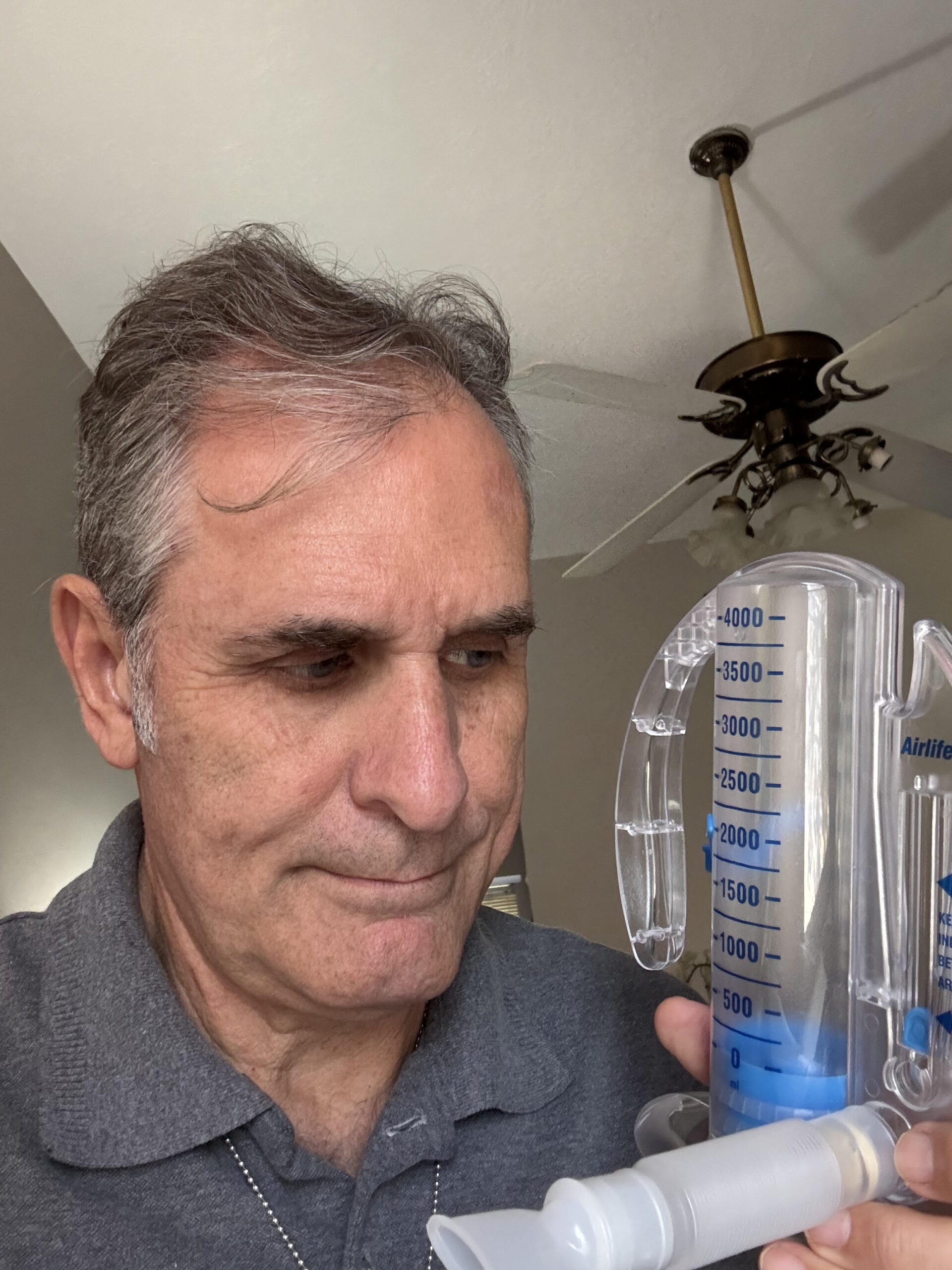
The spirometer is an important tool because after surgery you really don’t feel like doing deep breath work. You’re tired and fatigued and still trying to figure out what really happened to you to get in the hospital. It helps you get started in breath work and motivates you to continue.
You may be wondering why utilizing a spirometer is so important? You see, after surgery many patients spend long periods of time lying down on a bed (in my case it was 4 days) and are inactive. This may cause a person’s breathing to be shallow and even painful, but even more serious, could lead to lung collapse, low oxygen levels, and other complications like Pneumonia. I suppose doctor’s think it’s the most practical way to get a person to practice breathing immediately after a surgery. Doing so will provide the following benefits:
Another good thing to know about breathing is that it is an important skill that you can learn and strengthen just like any other skill developed in the fitness center or sportsfield. It can be the standalone skill that you train in to enhance all of the other fitness and athletic skills that you pursue, such as running, swimming, strength training, Zumba, playing soccer, etc. It can even help you better digest food, recover from workouts, sleep, think, and deal with stress.
In addition to using the spirometer, there are many breath exercises that don’t require any devices that you can do. It’s all a matter of implementing correct technique with a variety of available exercises. Some of them are basic and others are more challenging intended for elite athletes.
One concept to keep in mind is mouth breathing versus nose breathing. Most people aren’t conscious of their breathing patterns in every day living and causes them to breath inefficiently. This is critically important to start paying attention to because breathing through the mouth regularly causes you to breathe with shallow and rapid breaths sending your body into a parasympathetic state (fight or flight state). This effect minimizes the healthy exchange of oxygen and carbon dioxide in the body. This is huge because it can make the difference between having a great fitness workout or not. Note: there are times when breathing through the mouth is essential, especially during high-intensity interval training or anaerobic sports like soccer and basketball.
Conversely, breathing through the nose promotes an efficient process of breathing with a lower breathing rate and maximizes the exchange of oxygen and carbon dioxide. Additionally, it promotes the production of nitric oxide (NO), which enhances cardiovascular functioning and circulation.
As I mentioned before, there are many breathing exercises available for you to do. Below is a brief video of me demonstrating 3 breathing exercises to strengthen exhalation muscles:
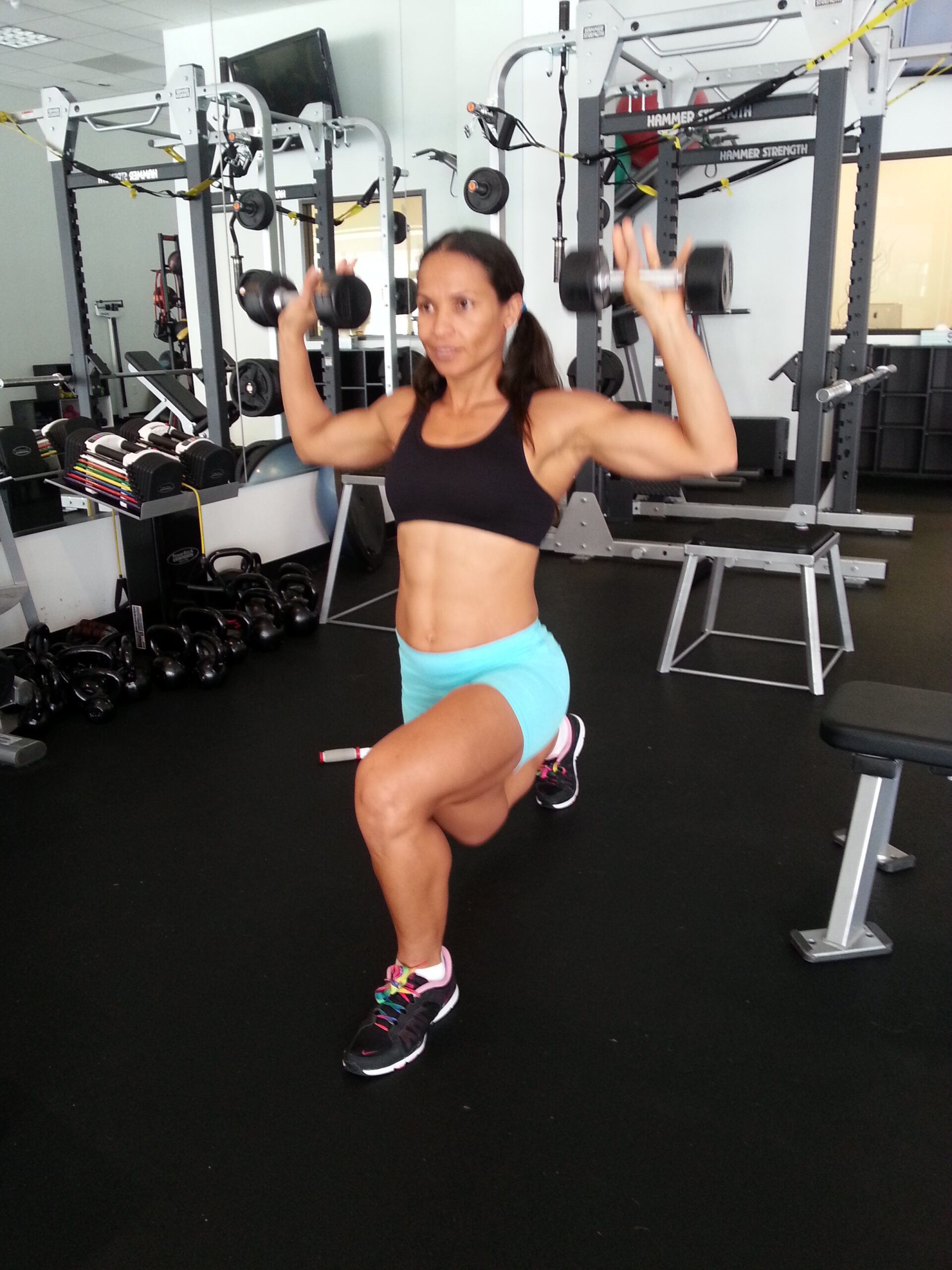
Click below to start workout:
Cida Fitness Beginner’s Guide to the Gym Workout e-book
Individual Exercise Videos in Workout: