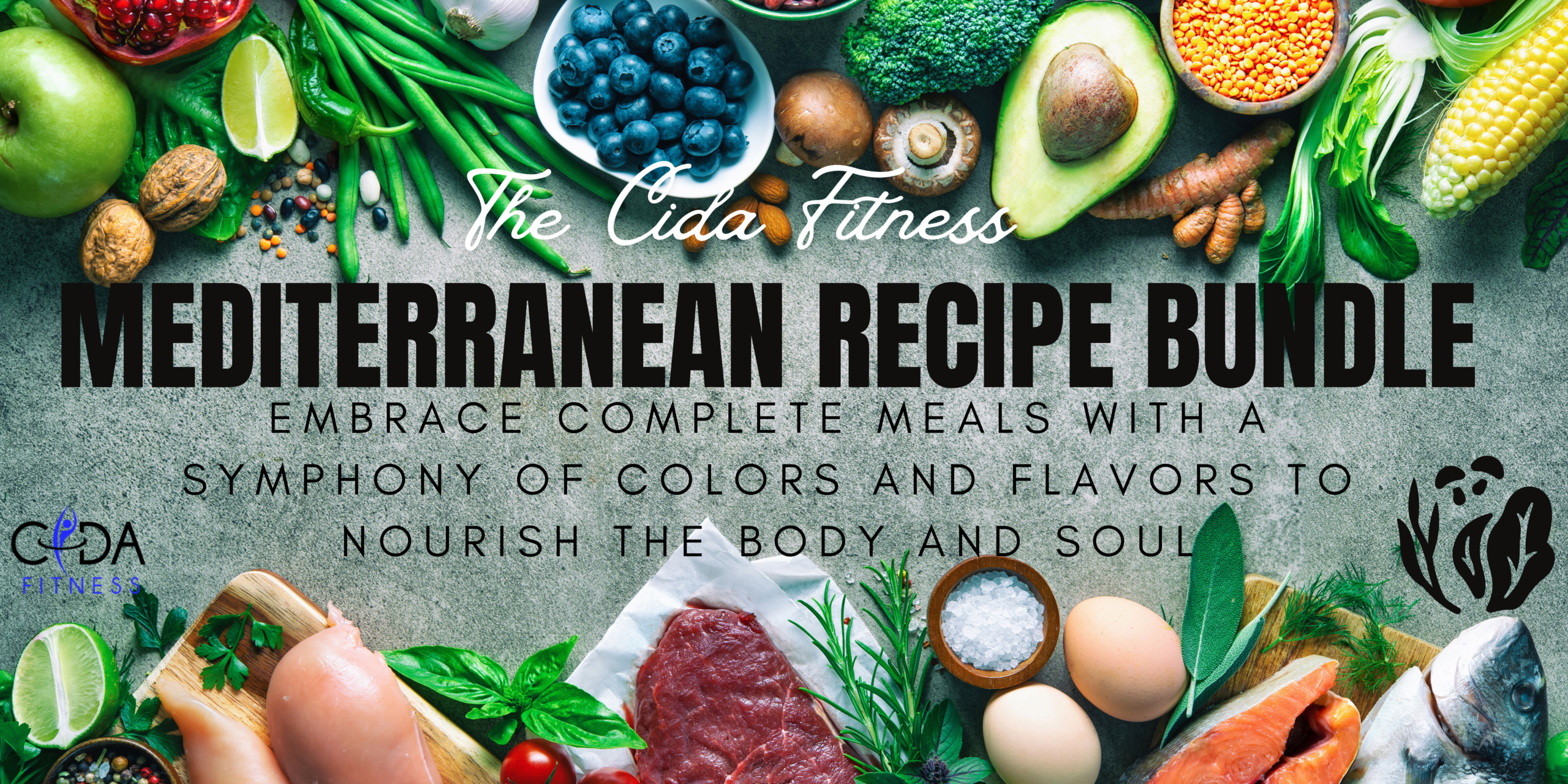
Click HERE to download free the Cida Fitness Mediterranean Recipe Bundle.

Personal Training, Fitness & Nutrition Coaching and Group Fitness
When someone experiences a heart attack (like me), it’s not just a medical event—it’s a wake-up call.
A moment when everything slows down, and you start asking the real questions: How can I protect my heart? How can I live longer and better?
That’s where the Mediterranean Diet comes in.
More than just a “diet,” it’s a way of life that’s been practiced for generations in places like Italy, France, Greece, and Spain—regions where people live longer, healthier, and happier lives than almost anywhere else on Earth. In fact, studies show that countries such as Italy and Spain consistently rank among the top five in Europe for life expectancy and low rates of heart disease.
The secret? It’s not one single food—it’s the balance, rhythm, and mindset of eating.
Why the Mediterranean Diet Is Considered the Healthiest in the World
This isn’t a fad. It’s a lifestyle deeply rooted in whole, natural, and unprocessed foods that nourish your body and protect your heart.
It’s rich in antioxidants, healthy fats, fiber, and nutrients that help reduce inflammation and stabilize blood sugar—two key factors in heart health.
In the words of Robert Haas, author of Eat to Win for Permanent Fat Loss,
“The body responds beautifully to good nutrition—it’s a high-performance machine that thrives on clean fuel.”
That “clean fuel” includes:
Olive oil as the primary fat (a powerhouse of monounsaturated fats).
Fresh fruits and vegetables, often seasonal and locally sourced.
Whole grains like farro, oats, barley, and brown rice.
Legumes such as lentils, chickpeas, and beans.
Fish and seafood rich in omega-3s, several times a week.
Moderate dairy (mainly yogurt and cheese).
Small portions of lean poultry or eggs.
Red wine, enjoyed slowly and socially—with your doctor’s approval, of course.
The Mediterranean Diet isn’t restrictive—it’s restorative.
The Heart Connection
For anyone recovering from a heart attack, this diet can be a game-changer.
Research from the European Society of Cardiology shows that individuals who adopt a Mediterranean eating pattern after a cardiac event reduce their risk of a second heart attack by up to 30%.
The emphasis on omega-3s, fiber, and antioxidants helps reduce arterial inflammation, lower cholesterol, and improve circulation—all while maintaining muscle mass and energy.
As Robert Haas also said,
“Eat to win means eat to live—longer, leaner, stronger.”
And that’s exactly what this diet delivers.
The Mediterranean Way of Life
Here’s something most people overlook: It’s not just what you eat—it’s how you eat.
In the Mediterranean, meals are sacred. Families and friends sit down together. No phones. No rushing. No eating in the car.
Food is connection. It’s community. It’s time.
They savor each bite, enjoy conversation, and often finish meals with laughter, fruit, and maybe a small glass of red wine.
That cultural difference—treating meals as leisure, not fuel—is one reason people in Mediterranean regions experience lower stress and longer lifespans.
So when you embrace this diet, think of it not as a plan but as a ritual of slowing down, breathing, and appreciating your food and your health.
Sample 7-Day Mediterranean Meal Plan
Day 1
Breakfast: Greek yogurt with honey, walnuts, and berries
Lunch: Lentil soup with olive oil drizzle and whole-grain bread
Dinner: Grilled salmon, roasted vegetables, and a glass of red wine
Day 2
Breakfast: Oatmeal with almonds and fresh figs
Lunch: Chickpea salad with tomatoes, cucumber, feta, and olive oil
Dinner: Whole-grain pasta with garlic shrimp and spinach
Day 3
Breakfast: Whole-grain toast with avocado and olive oil
Lunch: Quinoa tabbouleh with lemon and herbs
Dinner: Baked cod with tomatoes, olives, and herbs
Day 4
Breakfast: Smoothie with banana, spinach, and Greek yogurt
Lunch: Roasted vegetable wrap with hummus
Dinner: Chicken souvlaki with tzatziki and Greek salad
Day 5
Breakfast: Fresh fruit and a handful of almonds
Lunch: Tuna salad with olive oil, capers, and greens
Dinner: Ratatouille with farro and a drizzle of olive oil
Day 6
Breakfast: Yogurt parfait with granola and sliced peaches
Lunch: Minestrone soup with beans and kale
Dinner: Grilled sea bass, quinoa, and roasted zucchini
Day 7
Breakfast: Scrambled eggs with spinach and tomatoes
Lunch: Mediterranean flatbread with olives, feta, and roasted peppers
Dinner: Eggplant parmigiana with a side of mixed greens
Snack options: fresh fruit, nuts, olives, protein shake, or a small piece of dark chocolate.
The Takeaway
Healing your heart isn’t just about medication or exercise—it’s about daily nourishment that builds longevity from the inside out.
The Mediterranean Diet helps you live longer, think clearer, and feel lighter—not just physically, but emotionally.
If you want to turn your meals into medicine and your kitchen into a space of healing, this is where to begin.
PS: If you’d like a personalized Mediterranean-style nutrition plan tailored to your health goals and recovery, reply with “HEART” and we can help you with our online coaching program.