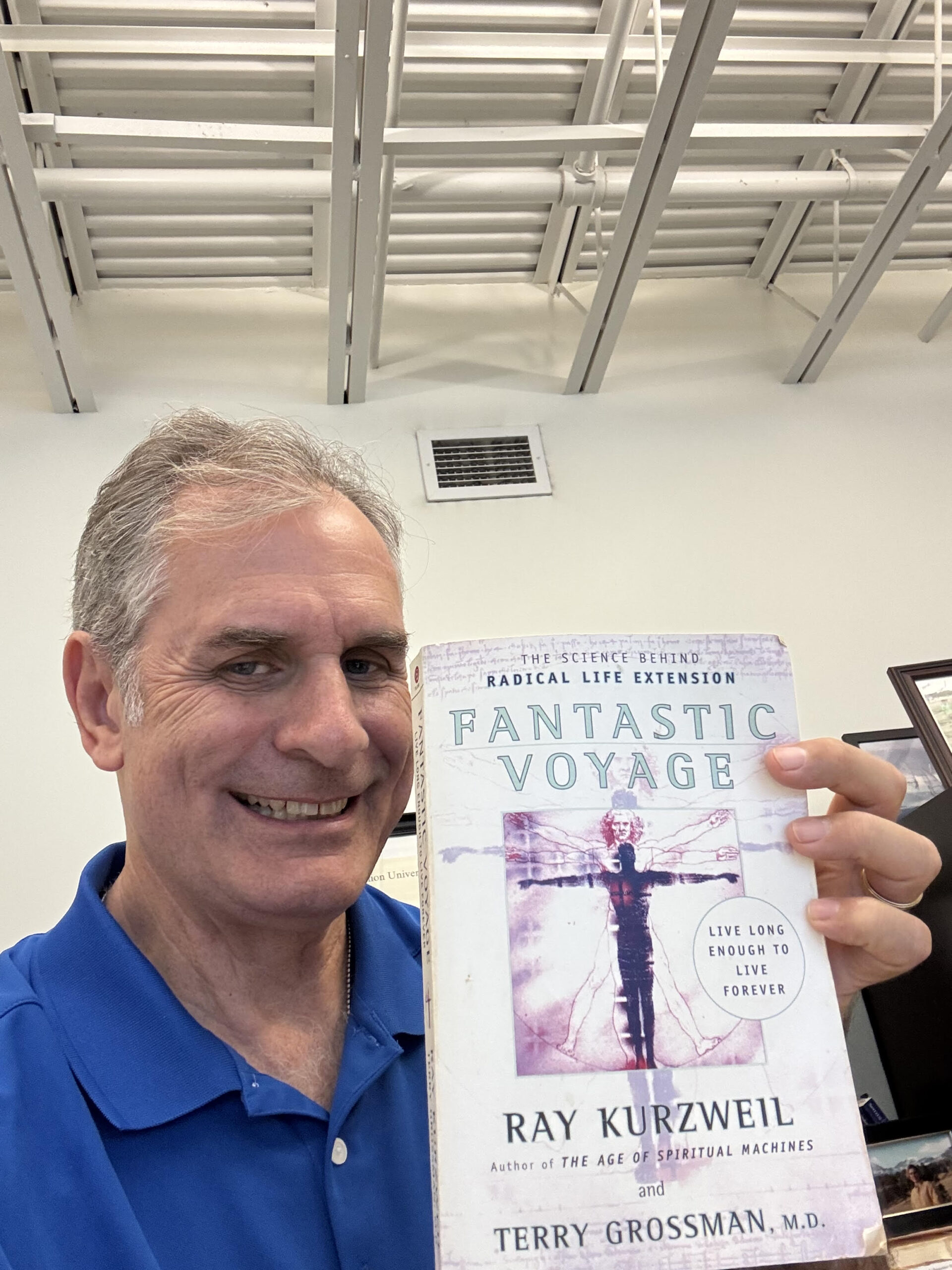
About 20 years ago, I read Fantastic Voyage by Ray Kurzweil and Terry Grossman. Recently, I picked it up again and found a section that grabbed my attention just as much as it did the first time: Women Do Stress Differently.
It made me pause.
As someone who works in fitness and nutrition coaching—and who has personally walked through heart recovery—I’m always interested in how stress affects the body. Because let’s be honest: stress is not just mental. It’s biochemical. Hormonal. Cardiovascular. It’s deeply physical.
And according to Kurzweil and Grossman, women may have a built-in physiological edge when it comes to handling stress.
The “Tend and Befriend” Response
We often hear about the classic stress response: fight or flight. Heart rate rises. Blood pressure increases. Cortisol surges. The body prepares for action.
But the authors point out that women also release oxytocin as part of their stress response. Oxytocin is often called the “bonding hormone.” It has a calming effect and encourages what researchers describe as “tend and befriend” behaviors—protecting children, nurturing others, gathering socially, and seeking support.
Here’s where it gets even more interesting:
-
Estrogen enhances oxytocin’s calming effect.
-
Testosterone (higher in men) tends to amplify aggression and hostility under stress.
In other words, while men may be more wired toward confrontation or withdrawal under pressure, women may be biologically nudged toward connection and community.
That’s powerful.
A Possible Heart Advantage?
The book suggests that premenopausal women’s relatively high estrogen levels may offer some protection against heart disease and some of the damaging effects of chronic stress.
From a cardiovascular perspective, this is fascinating. Chronic stress contributes to:
-
Elevated blood pressure
-
Increased inflammation
-
Poor sleep
-
Higher risk of heart disease
If estrogen enhances oxytocin’s calming and bonding effects, it may buffer some of that physiological wear and tear—at least during the premenopausal years.
Of course, this doesn’t mean women are immune to stress-related illness. Not at all. But it does suggest that biology may shape stress patterns differently between men and women.
So… Do Women Have the Advantage?
At first glance, it might seem that way.
But I think the deeper takeaway isn’t about advantage. It’s about awareness.
Women may naturally lean toward connection under stress. That means:
-
Calling a friend
-
Spending time with family
-
Gathering in community
-
Protecting and nurturing
And those behaviors? They’re incredibly healthy.
Social connection lowers stress hormones. Community improves mental health. Support systems improve recovery outcomes. Even from heart disease.
The real question is this:
Are we leaning into the tools we’ve been given?
What This Means for Stress Management
Whether you’re a man or a woman, there’s a lesson here.
-
Connection is medicine.
Isolation increases stress. Community reduces it. -
Hormones matter—but habits matter more.
You may not control your estrogen or testosterone levels naturally, but you absolutely control whether you pick up the phone, go for a walk with a friend, or build supportive relationships. -
Stress is not just emotional—it’s physical.
It impacts your heart, digestion, sleep, and recovery. -
Men can learn from the “tend and befriend” model too.
There’s nothing weak about connection. In fact, it may be one of the strongest stress-reduction tools we have.
My Personal Reflection
After going through a heart event myself, I became much more aware of how stress accumulates quietly over time. It’s not always dramatic. Sometimes it’s subtle and chronic.
What helped me most wasn’t just nutrition or exercise (though those are critical). It was community. Prayer. Family. Honest conversations. Support.
Maybe women are biologically nudged toward that sooner.
But the truth is, we all need it.
Final Thoughts
So do women really stress differently?
Biologically—yes, there’s evidence suggesting they do.
But instead of turning this into a competition between men and women, I see it as an invitation:
-
Lean into connection.
-
Build relationships.
-
Protect your heart—physically and emotionally.
-
Understand your stress patterns.
-
Use your biology wisely.
If stress is inevitable (and it is), then managing it intelligently becomes part of living well.
And whether you’re male or female, one thing is clear:
You don’t have to handle stress alone.