At Rush Fitness – 2014
Fitness isn't just about how you look. It's about how you live.

If there’s one exercise I could keep in my program for the rest of my life, it would be the kettlebell swing.
Simple. Powerful. Efficient. And incredibly effective.
The kettlebell swing is one of those rare movements that checks almost every box: strength, conditioning, fat loss, athleticism, hormonal support, and practicality. And the best part? All you need is a single kettlebell.
Let’s talk about why this movement is so spectacular.

The kettlebell swing is a hip-dominant, explosive movement that trains your body the way it was designed to move — with power from the hips.
When performed correctly, it works:
Glutes
Hamstrings
Quadriceps
Core (especially deep stabilizers)
Lats
Shoulders
Grip and forearms
Lower back (as a stabilizer, not a prime mover)
In other words, it’s a full-body powerhouse.
Unlike isolation exercises, swings train coordinated movement patterns. You’re not just building muscle — you’re building usable strength.
One of the things I love most about swings is their versatility.
Perform moderate sets with controlled breathing, and they build aerobic capacity.
Perform high-rep sets or heavy swings with short rest periods, and they become a brutally effective anaerobic conditioning tool.
Few exercises can push your heart rate through the roof while strengthening your posterior chain at the same time.
It’s strength and cardio married together in one explosive motion.
Explosive, compound movements stimulate the body in ways machine-based exercises simply cannot.
Because the kettlebell swing recruits large muscle groups — especially the glutes and hamstrings — and demands high neural output, it can contribute to:
Increased testosterone production
Improved growth hormone response
Better insulin sensitivity
Enhanced metabolic rate
Movements that train large muscle mass with speed and power send a strong signal to your endocrine system: adapt, grow stronger, stay resilient.
That’s powerful — especially for men over 40 who want to support healthy testosterone levels naturally.
If fat loss is one of your goals, kettlebell swings are your friend.
Due to their:
Full-body muscle recruitment
Explosive hip drive
Elevated heart rate response
They burn a high number of calories in a short amount of time. More importantly, they elevate post-exercise oxygen consumption (EPOC), meaning your body continues to burn calories after your workout ends.
It’s efficient. It’s effective. And it doesn’t require an hour on the treadmill.
Another reason I love this movement — especially for busy professionals — is that it requires:
One kettlebell. That’s it.
No machines.
No complicated setup.
No gym membership required.
You can train at home, in the garage, at a park, or while traveling. For those of us with full schedules, that simplicity is priceless.
This is critical: the swing is a hip hinge, not a squat.
Here’s how to do it properly:
Place the kettlebell slightly in front of you.
Feet shoulder-width apart.
Hinge at the hips (push hips back).
Grab the handle with both hands.
Keep your spine neutral and chest proud.
Pull the kettlebell back between your legs like you’re hiking a football.
Keep it high in the groin area.
Load your hamstrings.
Snap your hips forward aggressively.
Let the kettlebell float up to chest height.
Arms stay relaxed — they are hooks, not lifters.
Let gravity bring the kettlebell back down.
Hinge again.
Repeat.
Do NOT squat the movement.
Do NOT lift with your shoulders.
Keep your back neutral at all times.
Start with a manageable weight and master form first.
If you feel pain in your lower back (not muscle fatigue, but pain), stop and reassess technique.
If you’re new to swings, I recommend starting with:
3 sets of 10–15 reps
Focus on crisp, powerful hip snaps
Rest 45–60 seconds between sets
Quality always beats quantity.
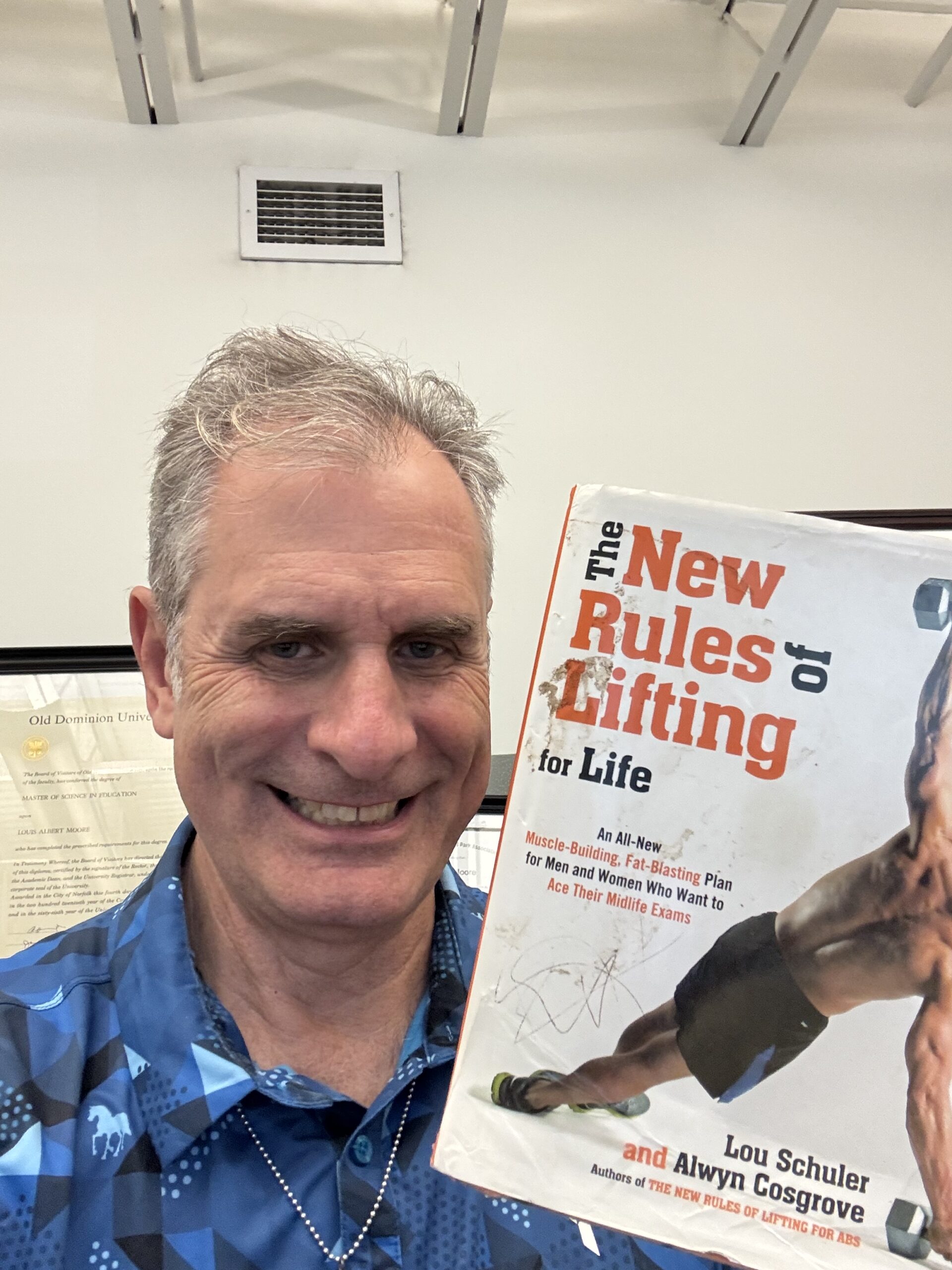
Strength coach Alwyn Cosgrove, author of The New Rules of Lifting, has long emphasized the power of training large muscle groups with intensity. One of his well-known sentiments about effective conditioning work is:
“If you want to burn fat, train movements — not muscles.”
The kettlebell swing embodies that philosophy perfectly. It’s a movement that trains the entire system — muscular, cardiovascular, and hormonal — all at once.
As a coach, I’ve seen kettlebell swings:
Improve athletic performance
Accelerate fat loss
Strengthen the posterior chain
Improve posture
Boost work capacity
And perhaps most importantly, I’ve seen them build confidence.
There’s something empowering about generating force from your hips and feeling that kettlebell float in front of you. It reminds you that your body was designed for power.
If you’re looking for one exercise that delivers extraordinary return on investment — this is it.
Start light. Focus on form. Be consistent.
And swing with purpose.
When it comes to fitness, longevity, and heart health, one hormone deserves a lot more attention than it usually gets: cortisol.
As a trainer and someone deeply invested in long-term health, I’ve come to appreciate that controlling your cortisol levels is not about eliminating stress. It’s about respecting how powerful this hormone is — and learning how to work with it, not against it.
Let’s break it down in a practical, positive way.

Cortisol is often called “the stress hormone,” but that label doesn’t tell the full story. It’s produced by your adrenal glands and plays a vital role in your daily survival and performance.
Under the regulation of the hypothalamic-pituitary-adrenal (HPA) axis, cortisol helps your body:
Regulate blood sugar
Control inflammation
Maintain blood pressure
Support metabolism
Manage your sleep–wake cycle
Mobilize energy during physical or emotional stress
In healthy amounts, cortisol is not the enemy. It’s essential.
In fact, cortisol is naturally highest in the early morning. This is called the Cortisol Awakening Response (CAR). It helps wake you up, sharpen your focus, and get you moving.
The problem is not cortisol itself.
The problem is chronically elevated cortisol.
When stress becomes constant — work stress, poor sleep, emotional strain, overtraining, financial pressure — cortisol can remain elevated for too long.
Chronically high cortisol levels may contribute to:
Increased abdominal fat storage
Elevated blood sugar and insulin resistance
High blood pressure
Sleep disturbances
Impaired immune function
Increased inflammation
Muscle breakdown
Anxiety and irritability
Now let’s talk about something very important: the heart.
For individuals with a cardiac condition — or anyone recovering from a cardiac event — managing cortisol becomes even more critical.
Chronic cortisol elevation can:
Increase blood pressure
Increase resting heart rate
Contribute to arterial inflammation
Promote blood sugar instability
Increase clotting tendency
All of these can place additional strain on the cardiovascular system.
If you’ve experienced a heart event (like me), stress management is not optional. It is foundational.
Managing cortisol and stress is essential to recovering well and living well after a cardiac event. Fitness alone isn’t enough. Nutrition alone isn’t enough. You must calm the hormonal environment that surrounds your heart.
Before we demonize cortisol, let’s give it credit.
Cortisol:
Helps you wake up and feel alert
Allows you to respond quickly in emergencies
Reduces excessive inflammation
Supports endurance during exercise
Maintains metabolic flexibility
Without cortisol, you wouldn’t have energy for a workout or mental clarity for decision-making.
The goal is rhythm, not suppression.
Cortisol should rise in the morning, gently taper through the day, and be low at night.
When that rhythm is intact, you feel strong, focused, and resilient.
Over the years, I’ve adjusted my habits to support a healthier cortisol rhythm.
One simple change I’ve made: I do not drink coffee first thing in the morning.
Because cortisol is already naturally high upon waking, immediately adding caffeine can potentially spike it further. For some people, this may amplify jitters, anxiety, and stress responses.
Instead, first thing in the morning I have a simple Lemon Drink (I wrote about this on this blog last month). It’s refreshing, hydrating, and gentle on the system.
Then about an hour later — once my body has fully awakened — I enjoy a cup of coffee with Laird Superfood creamer. That timing works better for me and feels more balanced.
Small shifts like this can make a meaningful difference over time.
Here are strategies I consistently recommend:
Aim for 7–8 hours of quality sleep. Cortisol dysregulation and sleep deprivation feed off each other.
Natural light exposure in the first hour of the day helps anchor your circadian rhythm and supports healthy cortisol timing.
Exercise is beneficial stress. But chronic overtraining can keep cortisol elevated. Recovery days are not weakness — they are strategy.
Walking, mobility work, deep breathing, and light stretching can lower stress hormones while still promoting movement.
Protein, healthy fats, and fiber-rich carbohydrates help stabilize blood sugar — which in turn stabilizes cortisol.
Prayer, journaling, reading, time outdoors, meaningful conversation — these aren’t luxuries. They are hormonal regulators.
It can be helpful to occasionally measure your cortisol levels through a simple blood test.
Keep in mind: insurance may not always cover this test unless there is a specific medical reason. If your doctor does not recommend it or insurance declines coverage, you can have it done privately at a reasonable cost through the Life Extension Foundation.
Having objective data can be empowering. It gives you a clearer picture of how your body is responding to your lifestyle.
If you’ve had a cardiac event — or you’re simply serious about preventing one — controlling cortisol isn’t just about feeling calm.
It’s about:
Protecting your arteries
Stabilizing blood pressure
Supporting metabolic health
Reducing inflammatory burden
Improving recovery capacity
Managing stress is not soft. It is strategic.
Fitness builds the body. Nutrition fuels it. But hormonal balance protects it.
You don’t need to eliminate stress from your life — that’s impossible. What you can do is build resilience, structure your day wisely, and respect your physiology.
Your heart deserves a calm internal environment.
And when you manage cortisol well, you don’t just recover better — you live better.
Stay strong, stay balanced, and remember: discipline is not only about pushing harder. Sometimes it’s about slowing down intelligently.