

A simple guide to this common food additive and your gut health
When we think about eating for better health, we usually focus on things like vegetables, fruits, healthy fats, lean proteins, and whole grains. But there is another part of the equation that is easy to overlook: the ingredients added to processed foods.
One ingredient that has received increasing attention is polysorbate 80.
So, what is it—and should you be concerned about it?
What Is Polysorbate 80?
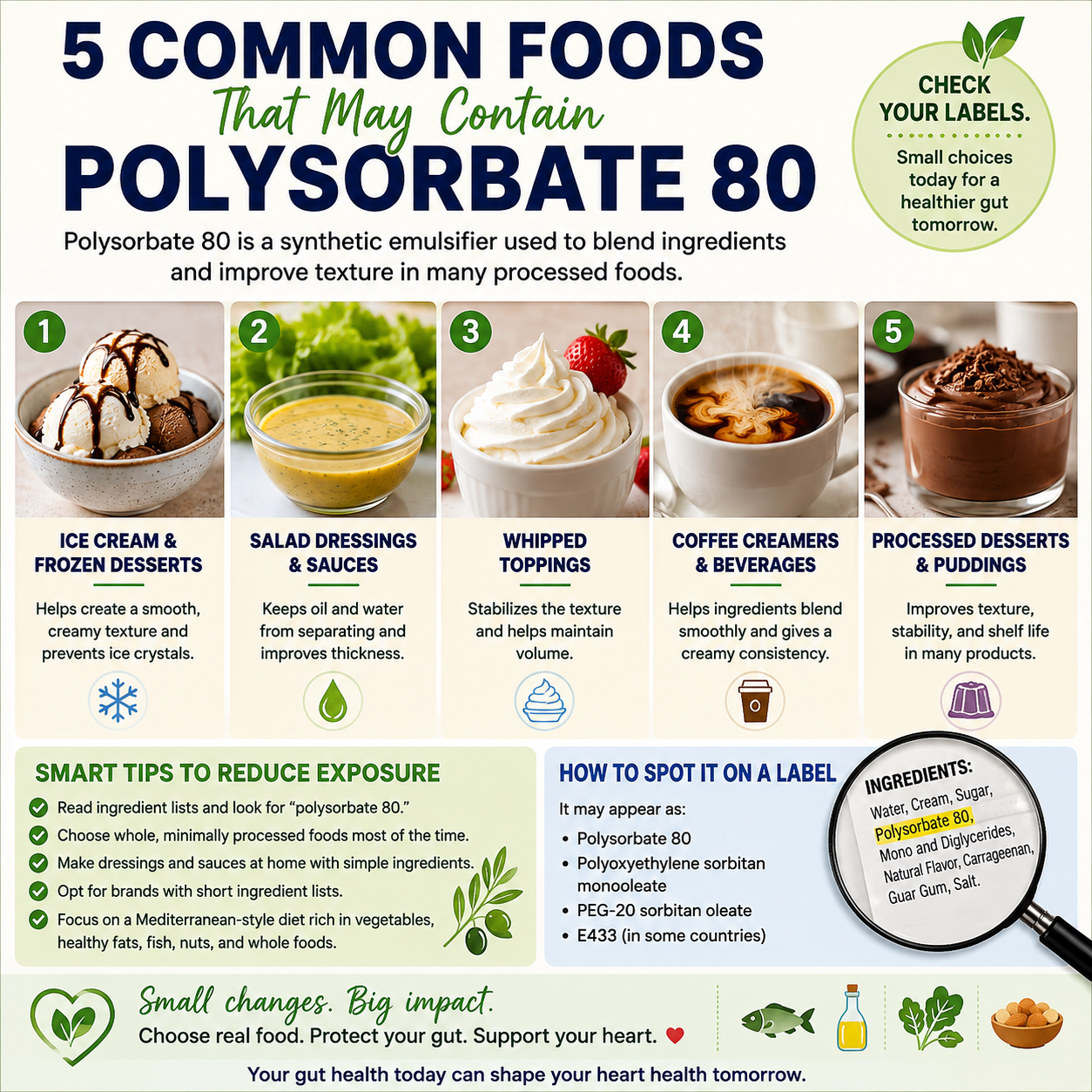
Polysorbate 80 is a synthetic emulsifier. Food manufacturers use emulsifiers to help ingredients such as water and fat stay mixed together. They can also give foods a smoother, creamier texture and help maintain consistency during storage.
You may find polysorbate 80 in foods such as:
- Ice cream and frozen desserts
- Some salad dressings
- Whipped toppings
- Coffee creamers
- Sauces and processed foods
- Some packaged desserts and beverages
It appears on food labels as “polysorbate 80.”
Why Are People Concerned About It?
The concern isn’t that polysorbate 80 is an obvious toxin. It is an approved food additive, and regulatory agencies consider permitted levels safe.
The bigger question is what regular, long-term exposure to emulsifiers might do to the gut microbiome.
Research, particularly laboratory and animal research, suggests that polysorbate 80 may alter the composition of intestinal bacteria and affect the protective mucus layer lining the digestive tract. Some studies have also found changes associated with intestinal inflammation and permeability.
Dr. William Davis, cardiologist and author of Super Gut, has been particularly outspoken about this issue. In his book, he discusses research suggesting that emulsifiers such as polysorbate 80 can disrupt the intestinal mucus barrier and alter gut bacteria.
His practical advice is straightforward:
“Avoid polysorbate 80, carboxymethylcellulose, and other emulsifiers completely.”
— Dr. William Davis, Super Gut
Dr. Davis’s recommendation is more cautious than the current mainstream evidence. While the research raises legitimate concerns, we don’t yet have strong human evidence proving that ordinary dietary exposure to polysorbate 80 causes gut disease.
Does Polysorbate 80 Cause SIBO?
This is an important distinction.
There is research suggesting that polysorbate 80 can change the intestinal microbiome, and Dr. Davis discusses a possible relationship between emulsifiers, bacterial overgrowth, and SIBO.
However, polysorbate 80 has not been proven to directly cause SIBO in humans.
SIBO is a complex condition with many possible contributing factors, including problems with intestinal motility, anatomy, previous surgery, and other gastrointestinal conditions.
So rather than saying “polysorbate 80 causes SIBO,” it is more accurate to say that research raises questions about whether certain emulsifiers may create an intestinal environment that is less favorable for a healthy microbiome.
What About Heart Disease?
There is also an interesting connection worth watching—but we should be careful not to overstate the evidence.
Polysorbate 80 has not been proven to cause coronary artery disease or heart attacks.
However, gut health, inflammation, metabolic health, and cardiovascular health are increasingly recognized as interconnected. Changes in the gut microbiome and intestinal barrier may influence inflammation and other metabolic processes that are relevant to cardiovascular health.
That makes minimizing unnecessary exposure to heavily processed foods a reasonable strategy—but it does not mean that polysorbate 80 itself has been established as a cause of heart disease.
Practical Tips: How Can You Reduce Your Exposure?
The good news is that avoiding polysorbate 80 doesn’t have to be complicated.
1. Read the ingredient list
When buying packaged foods, look for “polysorbate 80.”
If it’s there, consider whether you can find another brand without it.
2. Be especially careful with ice cream
Ice cream is one of the foods where emulsifiers are commonly used.
Try choosing products with a relatively short ingredient list containing recognizable ingredients such as cream, milk, eggs, fruit, and natural flavorings.
3. Look at salad dressings
Some commercial dressings contain emulsifiers and other additives.
An easy alternative is to make your own with:
Extra-virgin olive oil + vinegar or lemon juice + herbs + a little salt and pepper.
Simple—and delicious.
4. Choose foods that don’t need a long ingredient list
This is perhaps the best rule of all.
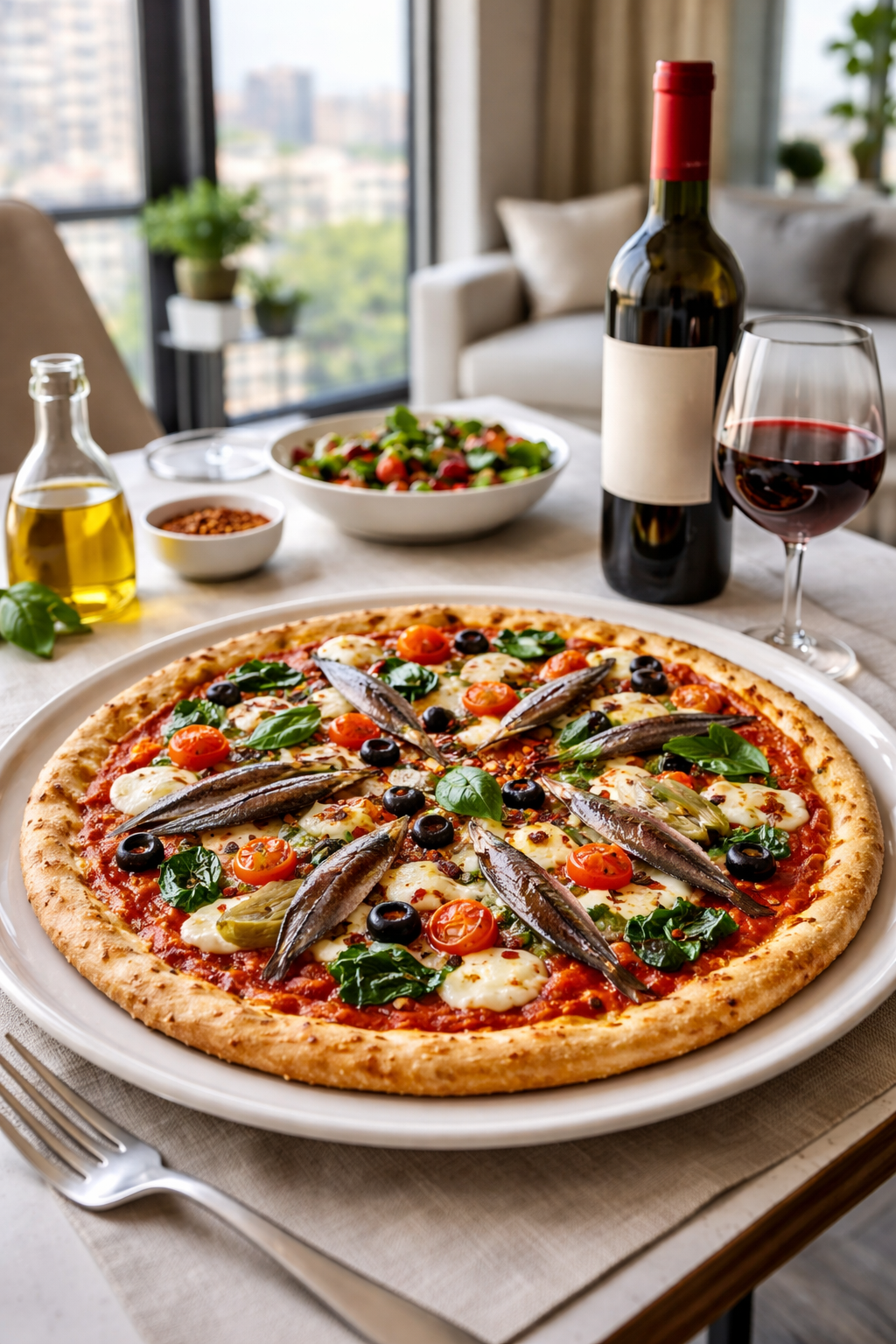
Fresh vegetables, fruits, fish, eggs, nuts, seeds, beans, olive oil, and other minimally processed foods generally don’t require emulsifiers.
5. Don’t obsess over one ingredient
This is important.
You don’t need to throw away everything in your pantry because you found polysorbate 80 on one label.
Your overall dietary pattern matters much more than any single ingredient.
A diet centered around whole foods, vegetables, fiber, fish, healthy fats, and minimally processed foods is a much more powerful foundation for long-term health.
The Bottom Line
Polysorbate 80 is a common food emulsifier that helps processed foods maintain their texture and consistency.
Emerging research raises legitimate questions about its effects on the gut microbiome and intestinal mucus barrier. However, it has not been proven to cause SIBO or heart disease in humans.
For those of us trying to improve cardiovascular health and eat a more Mediterranean-style, whole-food diet, there is little downside to minimizing unnecessary synthetic emulsifiers.
So the next time you’re shopping, take a few seconds to turn the package around and read the ingredient list.
The fewer unnecessary ingredients, the better.
Your heart may benefit from the overall dietary pattern—and your gut may appreciate it, too.